
What Decision-Makers Should Look for in a Contract Cleaning Company
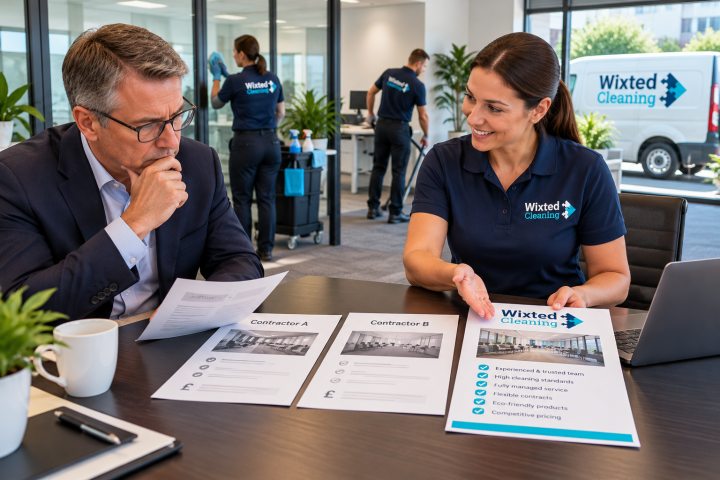
Choosing a contract cleaning company means looking past the price and the task list. The provider will have regular access to your workplace and affect the experience of staff, visitors and customers.
Decision-makers need to understand how the service will work after they accept the proposal. Who manages the contract? What happens when someone is absent? How will the provider handle changing requirements?
A good proposal should answer those questions clearly. If it doesn’t, the gaps often become visible once the contract is underway.
Wixted Cleaning has provided contract cleaning across Bedfordshire and Milton Keynes since 2002, now for more than 100 clients, with an operations manager responsible for each contract.
1. An understanding of your workplace
A provider can’t plan an effective cleaning service without understanding the site.
The initial visit should go beyond floor area and the number of washrooms. The provider should ask how the building is used, when it is busiest and which areas need the most attention.
Useful questions include:
- How many employees and visitors use the site?
- Are there shifts or flexible working patterns?
- Which areas have the highest footfall?
- Are there secure or specialist areas?
- Will cleaning take place during or outside working hours?
- Are there planned changes to the workplace?
The answers should shape the proposed service. A standard schedule copied from another building may miss important details or allocate time to the wrong areas.
We plan our commercial cleaning services around the individual workplace, because the service needs to reflect how people use each building.
2. A clear and realistic specification
The cleaning specification should show what the team will clean, how often, and what periodic work the contract includes.
Be cautious of proposals that rely on broad descriptions such as “general office cleaning” without explaining what that includes. Vague wording makes performance harder to assess and can leave the provider and client working to different expectations.
Look for clear detail covering:
- Workstations and shared surfaces
- Kitchens and breakout areas
- Washrooms and consumables
- Reception and meeting rooms
- Floors and high-traffic areas
- Waste removal
- Periodic cleaning tasks
The proposal should also be realistic about the time and resources needed. A low price won’t deliver value if the cleaning team doesn’t have enough time to complete the work properly.
Businesses often focus on price, frequency and task lists when reviewing office cleaning contracts. It’s just as important to check how responsibilities are defined, how standards will be reviewed and what happens when something needs to improve.
3. Clear management and communication
You should know who will manage the contract once it begins.
A named manager gives the client a direct contact for questions, feedback and changes. That person should understand the site, know the cleaning team and be able to deal with problems quickly.
Ask how often the manager will visit and what those visits will cover. This could include checking completed work, speaking with cleaners and responding to feedback.
The communication route should be simple. If a request has to pass through several departments before reaching someone who can act, small issues are more likely to continue.
A short chain of command can make communication faster and accountability clearer. It gives clients direct access to someone who understands the contract.
4. A plan for staffing, cover and quality
The cleaning team will determine how well the contract performs each day. Decision-makers should ask how the provider recruits staff, introduces them to the site and supports them.
Cleaners need clear instructions, suitable equipment and regular contact with their manager. New team members should receive a full site handover rather than being expected to work everything out during their first shift.
The provider should also explain absence cover. Every provider will deal with sickness, holidays and staff changes. What matters is whether there is a reliable process for maintaining the service.
Ask:
- How are cleaners selected and trained?
- Who explains site-specific requirements?
- How is absence cover arranged?
- How are replacement cleaners briefed?
- Who checks quality during staffing changes?
Quality checks should lead to action. A useful inspection identifies what needs attention and confirms how it will be resolved. Complicated reporting means little if the same problem continues.
5. Flexibility after the contract begins
Workplaces rarely stay the same throughout a cleaning contract. Teams grow, working patterns change and some areas become busier than expected.
A suitable provider should be willing to review the cleaning plan and make sensible adjustments. Some changes will affect cost or staffing. The conversation about them should be clear and practical.
Ask how the provider handles service reviews and what happens when requirements change. A provider that understands the site should be able to explain the effect on cleaning time, staffing or frequency.
Five questions to answer before you decide
Before appointing a commercial contract cleaning provider, decision-makers should be able to answer five questions:
- Does the provider understand how our workplace operates?
- Is the cleaning specification clear and realistic?
- Do we know who will manage the contract?
- Are staffing, cover and quality checks properly explained?
- Can the service adapt when our requirements change?
Experience is worth considering too. As Wixted Cleaning looks ahead to its 25th anniversary in 2027, the business continues to build its service around local management, regular quality checks and long-term customer relationships.
If any answer remains unclear, ask for more information before signing. A professional provider should be able to explain exactly how the service will be delivered.
If you’re reviewing contract cleaning for your organisation, speak to our team. We’ll visit your site, discuss what you need and explain how we would manage the service.